
In an era where digital transformation is paramount, businesses across the globe have embraced the cloud with open arms, seeking agility, scalability, and cost-efficiency. However, as our reliance on cloud services burgeons, so too does the complexity of the security challenges inherent within these virtual environments. Ensuring the integrity, confidentiality, and availability of data and services in the cloud is no trivial endeavor. This discourse aims to serve as a comprehensive guide to understanding and implementing robust cloud security practices.
Introduction
As organizations transition from traditional on-premises IT infrastructure to cloud-based solutions, security considerations must evolve to address an ever-changing threat landscape. Data breaches, regulatory compliance, and the shared responsibility model in cloud environments necessitate a reimagining of security strategies. Cloud security is not solely the province of technical measures but encompasses a broad array of policies, technologies, controls, and expert knowledge designed to protect cloud-based systems, data, and infrastructure.
The Authenticity of the Threat Landscape
The cloud is no shelter from the tempest of cyber threats that plague the digital world. With incidents involving unauthorized data exposure, data breaches, and misconfigured cloud storage, security has never been more paramount. A robust cloud security strategy needs to acknowledge the specifics of the cloud environment it is protecting, as well as the types of threats that are most common:
- Data breaches can occur due to weak authentication, poor key and certificate management, or a lack of data encryption.
- Insufficient identity, credential, and access management can give attackers the foothold they require to access sensitive data.
- Insecure APIs can provide hackers with an opportunity to exploit a cloud service.
- System vulnerabilities are always a concern, and cloud environments are no exception to being targets for exploitation.
- Advanced Persistent Threats (APTs) can penetrate networks and remain undetected for long periods.
- Malicious insiders pose a significant threat, given their legitimate access to the cloud infrastructure.
Understanding the threat landscape is crucial for developing a defense-in-depth approach to cloud security.
The Shared Responsibility Model
One of the most critical concepts in cloud security is understanding the shared responsibility model. This model clarifies the division of security responsibilities between the cloud service provider (CSP) and the cloud service user or customer:
- CSP Responsibilities: Generally include securing the infrastructure that runs all the services offered in the cloud. This encompasses compute, storage, and networking resources, as well as the physical infrastructure and network infrastructure.
- Customer Responsibilities: Vary depending upon the service model (IaaS, PaaS, SaaS), but customers are always responsible for their data, identity and access management, and securing the operating systems, platforms, and applications they run in the cloud.
A systematic approach to upholding the client side of this model is imperative for a robust cloud security posture.
Core Principles of Cloud Security
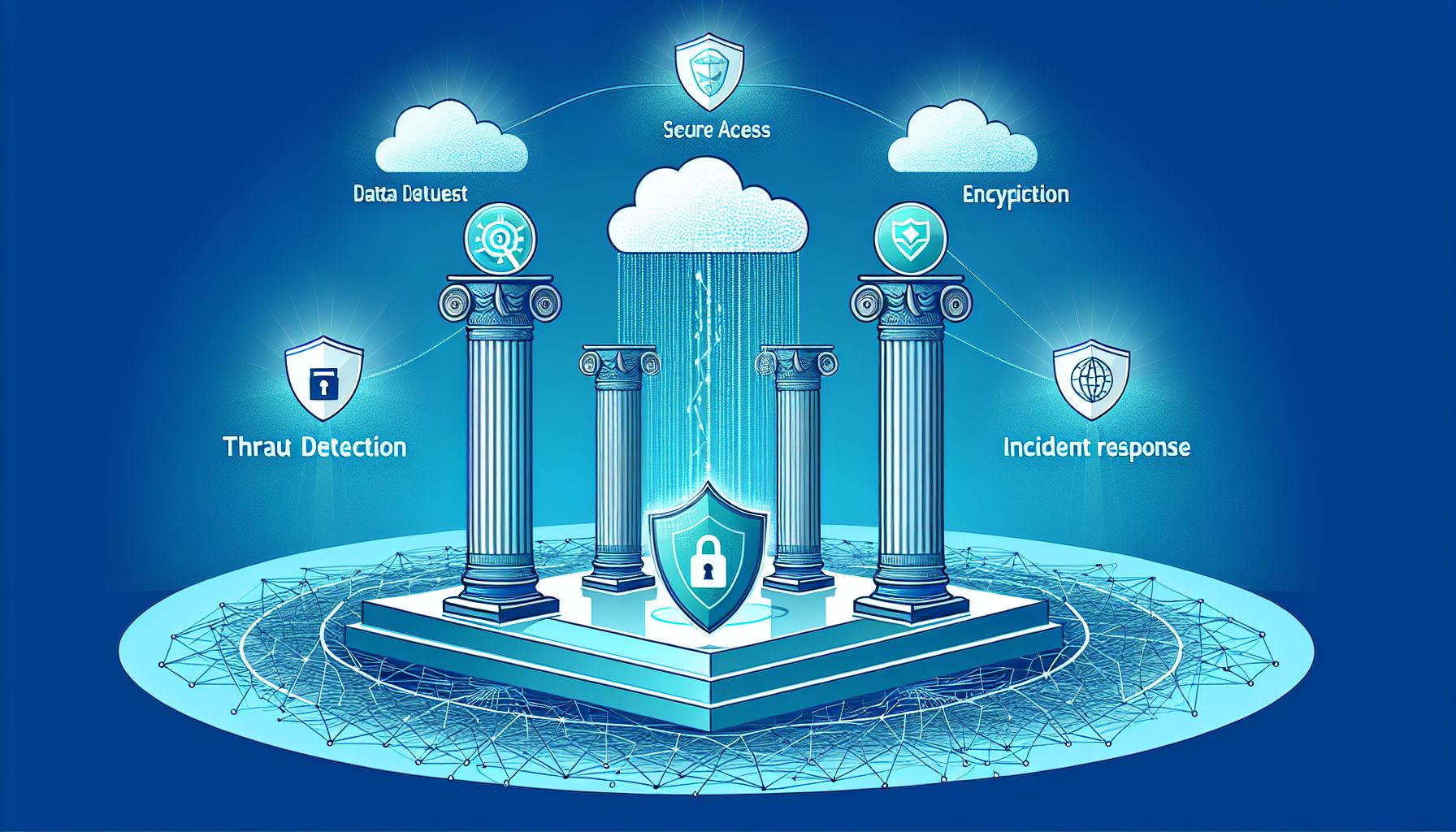
To navigate the complex domain of cloud security, several foundational pillars must form the cornerstone of any cloud security strategy:
1. Data Encryption
Encrypting data at rest and in transit ensures that even if data is intercepted or accessed without authorization, it will remain incomprehensible without the encryption keys. Strong encryption standards such as AES with 256-bit keys are recommended.
2. Identity and Access Management (IAM)
Implementing strict IAM policies enables the enforcement of minimum privilege access rights. This means users, applications, and systems only have the access necessary to perform their duties, reducing the potential for data leakage or unauthorized actions.
3. Secure Access Controls
Access control mechanisms such as multi-factor authentication (MFA), single sign-on (SSO), and conditional access policies add layers of protection, ensuring that only authenticated and authorized users can access cloud resources.
4. Regular Security Assessments
Regularly evaluating the security posture with automated tools and periodic audits can identify vulnerabilities, ensuring continuous improvement in security practices. This also helps in compliance with regulations like GDPR, HIPAA, and PCI DSS.
5. Incident Response Planning
Having a robust incident response plan in place that includes notifying affected parties, isolating affected systems, and eradicating the threat is essential in mitigating the damage caused by any security breach.
6. Training and Awareness
Employees should be trained to recognize threats such as phishing scams and social engineering attacks. Their awareness can act as a frontline defense against cyber-attacks.
7. Vendor Management
Thoroughly assessing and managing the security posture of third-party vendors and ensuring their practices align with your organization’s security requirements are vital components of cloud security.
Next-Generation Cloud Security Tools and Best Practices
To address the multifaceted challenges of cloud security, organizations should consider employing advanced tools and adhering to best practices, such as:
- Cloud Access Security Brokers (CASBs): Serve as an intermediary that can enforce security policies between cloud users and cloud applications.
- Cloud Security Posture Management (CSPM): Tools that automate the detection and remediation of risks across cloud infrastructures.
- Zero Trust Security Model: Assumes no trust for both internal and external networks, requiring continuous verification of all users and devices.
- Automated Compliance Monitoring: Leveraging tools to monitor and enforce compliance policies in real-time.
- Endpoint Protection: Secure endpoints that access cloud services to ensure that devices do not become a weak link in security.
- API Security: Apply strong authentication and encryption for APIs, and regularly audit their access and activities.
By integrating these tools and practices, organizations can create a dynamic and adaptable cloud security strategy capable of withstanding the varied and evolving threats.
Conclusion
In closing, cloud security should not be viewed as an afterthought or mere line item on the IT expenditure sheet. It is an investment in an organization’s sustenance and a pledge of trust to customers and stakeholders. From understanding the threats and embracing the shared responsibility model to implementing an array of sophisticated tools and practices, the path to robust cloud security is multifaceted. Organizations that effectively anchor their cloud ventures on these principles will not only protect their assets but will also pave the way for burgeoning opportunities and growth in the cloud-reliant business landscape of tomorrow.